uugr on cozy games, humor, and the end of times
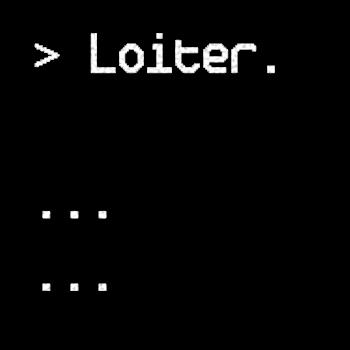
Evening (featured in Indiepocalypse #67), starts out with players entering a small, isolated house in the woods, where they’re greeted by Griggums, an old lady sitting by the fireplace, and Nibbles, a playful cat. Without an explicit goal, they’re free to roam around, read books, and even make themselves tea. For the most part, it’s a calming and comforting experience, but there’s something off about it all. As time passes and you continue completing tasks, strange things start happening. Also, the house seems to be getting smaller and smaller, somehow. At some point, you can’t help but think that maybe Griggums’ comments about mysterious green mold and everything “fading away” might be more than the ramblings of a confused old woman.
As a game, Evening is in no way short on unsettling elements, especially as you get closer to the ending. Somewhat surprisingly, however, its developer claims that the original premise for the project was even more “overtly horror-y.” uugr, who describes himself as a hobbyist game designer, first came up with the concept during the Covid-19 pandemic. It was sort of a reaction to the popularity of “cozy games” like Stardew Valley and Spiritfarer, in which players complete chores and domestic tasks in mostly quiet and relaxing environments. “My experience with a lot of these games — particularly playing them during the pandemic, when they’re explicitly trying to substitute the experience of comfort in an uncomfortable world — is that they’re kind of stressful, oddly,” he says. “They’re made to be cozy, but they’re kind of stressful because you spend the whole game experience faintly aware of something terrible the game is trying to distract you [from].” For Evening, the idea was taking that feeling and making it more overt.
Then, something unexpected happened during the development process. As the project took shape, uugr became more and more invested in the world of the game, which completely changed the final product. “The funny thing about it is [that], in order to make a game that deconstructs cozy games, first you have to actually make something cozy. You have to start by making all these little sequences where you play with the cat and cut logs and things like that. And in the process of doing it, I kind of accidentally grew attached to this world that I was building so that I could destroy it,” he explains. When it came time to design the second half of the game, uugr no longer felt like creating a “horrific deconstruction.” Instead, he went for a much more melancholic route. “I ended up feeling like it was sad that this was happening to the world of the game,” he says.
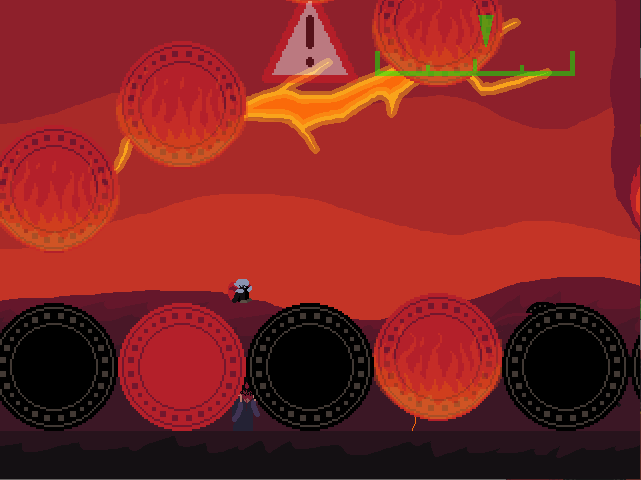
As a developer, uugr is very familiar with apocalyptic themes. The dramatic and sudden end of the world has been an idea or a setting in many of the games he has designed in the past (all of which you can play for free in his personal page). The endless runner Connect the Apocalypse, for example, takes place on a planet ravaged by a cataclysmic event brought about by the board game “Connect Four.” Then there’s Say Nice Things About Detroit, a zombie survival title in which the only means of defense available to players is typing out nice things about the titular city. For uugr, a world going through the apocalypse is a great domain for a game to take place in because of the freedom it gives him as a storyteller. “Since the world is ending, you can kind of go nuts,” he claims. “I don’t have to worry too much about maintaining a continuity that goes on after the end of the story. At the end of Evening there’s kind of nothing left and, in a weird way, it’s kind of creatively freeing.”
Alongside their more dramatic and scary elements, uugr’s games also share a great deal of humor and eccentricity. In his itch.io page, his bio simply says “I like weird games.” Some of the titles he has been influenced by include the surrealist adventure game Yume Nikki and the deconstructionist classic The Stanley Parable. Similarly, he also talks about getting inspiration from games that he finds unsatisfying or too conventional. The idea for his game Sleep, which transports players to strange dreamlike worlds with no explanation and can be completed in a matter of minutes, came partly from being frustrated with abstract games that were often a little too slow or boring for his taste. When it comes to humor, it is most noticeable in more story-driven projects like Evening and Bread Kingdom, this last one about players navigating a world made of bread run by bread people; the story’s protagonist being frequently given the option to eat whoever it is they’re speaking to. For uugr, the humor aspect is a consequence of how “loose and spontaneous” the developing process is. “Throwing a lot of shit at the wall tends to make things funnier because you kind of don’t have to worry too much about what you’re doing,” he says.
When thinking of games he would recommend to people who enjoyed Evening, the first one that comes to mind is Connect the Apocalypse. “It’s probably the most substantive and the most fun as a pure gaming experience,” he says. He also mentions his intense and unforgiving rhythm game Rhythm Hell (its descriptor in itch.io simply being “DESTROY YOUR KEYBOARD”). “It’s a bit harder […] and the harder it is, the more it gives me something to keep coming back to after I’m finished making it. It’s something I’m proud of,” he adds.
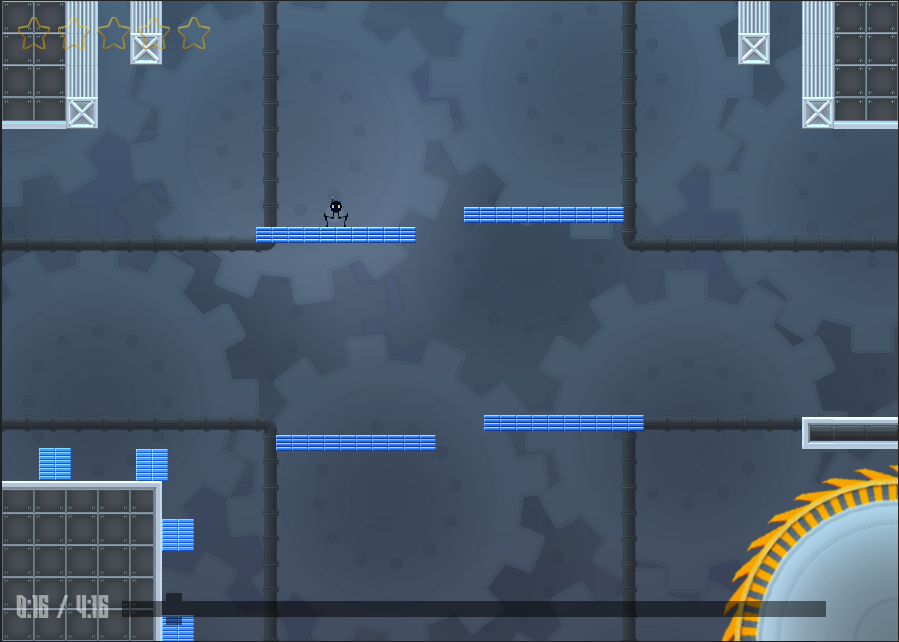
uugr’s latest project, Remote Perception, is a short yet challenging rhythm platformer
filled with loud music and distorted visuals. After taking a break from game
development, he’s already thinking about the concepts and mechanics he’d like to
explore in the near future. “I’ve been thinking a lot about using intensity and
overwhelm as themes,” he explains. When asked about his interest in both very loud
and very quiet games, he says he doesn’t think of it as a contradiction. “My strongest
preference is to move as jarringly between the two extremes as possible,” he affirms.
“I would like to make manic depressive games.”