Henry Sarunic interview
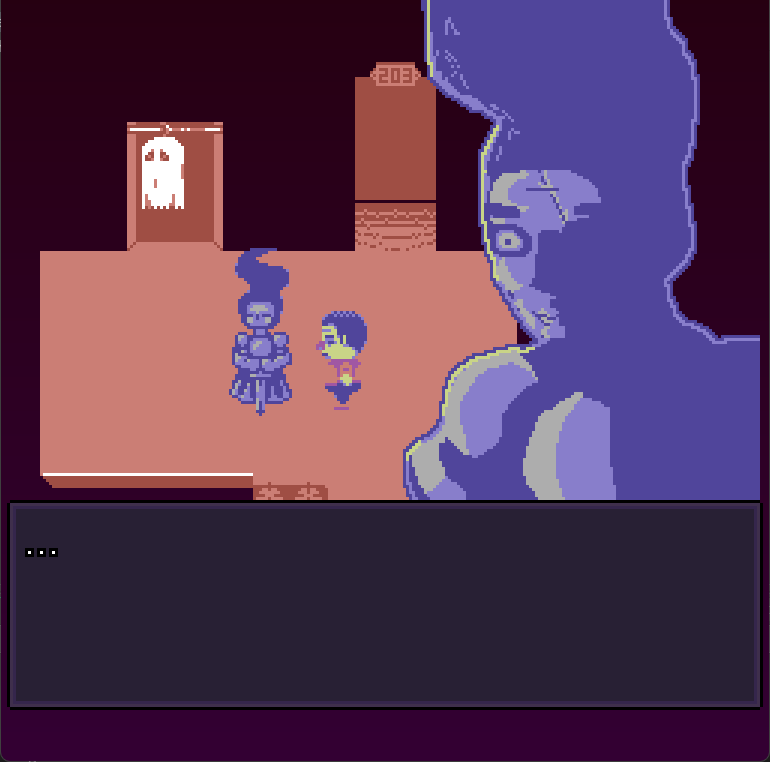
Henry Sarunic is an Australian game developer in Naarm, currently studying at RMIT University’s School of Design. Sarunic’s independently released titles have helped him build a small following and have been featured in anthologies such as the Games Kitchen: Future Play Library. Recently, Henry’s Apartment Complex, a Lovecraftian slice-of-life horror comedy put together for a game jam, was featured in the 60th issue of Indiepocalypse.In it, you play as a forty-something-year-old co-landlord who starts seeing strange creatures—ones you feel compelled to provide affordable housing to, and this puts you on a strange path for personal transformation. The game tackles complex issues such as the housing crisis, personal growth and development, and aligning one’s socioeconomic standing with one’s morals and ethics. Because of how unique it is, it’s piqued writer J. D. Harlock’s interest, so he reached out to Henry Saurnic for a discussion on just how this odd yet relatable story came about!
J. D. Harlock: Henry, thank you for taking the time out of your busy schedule to sit down with me today. Can you tell us a bit about yourself and how you first got into game development?
As a kid, I always loved playing GBA games and watching my siblings play random stuff like Chicken Invaders on my mum’s laptop. My journey into game development specifically started when I was about eight years old, watching my older brother on the family computer, messing around in GameMaker Studio. He made a couple of cool games that always made me really happy to play. By constantly nagging my brother and getting my mum to get him to listen to me, he taught me how to use the program’s drag-and-drop features, which led me to make my own game, eventually called “Crocodile Snap Jack.” It was just a simple game where meat falls from the top of the screen. You avoid the splats of oil, or you lose. Since then, I’ve learnt other engines, but I still love using Gamemaker Studio 2 for 2D games and have gotten a lot better at it, to the point where I get to teach it to my older brother, who is returning to it, which is a nice way of things going full circle.
J. D. Harlock: So, what first inspired Apartment Complex?
Apartment Complex was initially made for “Cosmic Horrors Jam III,” so the whole thing had to be finished in ten days. The jam’s theme already had me heading in a Lovecraftian direction, but the biggest influence, other than that, was: no sleep stories. I love listening to a channel called “Dark Somnium” that reads these kinds of stories. One in particular has always stuck with me: a man with amnesia wandering through an apartment building full of unexplained monsters and crazy things going on in some sort of apocalypse. The story makes it feel like those things are just how it is with no elaboration, and that’s what I love about dark whimsy. I loved this story’s setting so much that it led to the idea of flipping the power dynamic between eldritch horrors and the human main character, since they would be the tenants of your building. This changed the game from a survival horror to an RPG about a middle-aged guy realising it’s not too late to change the direction of his life for the better.
J. D. Harlock: Do you see yourself in the main character?
I do. At the time I was making the game, I felt a lot of isolation and self-deprecation, which was made worse by my struggle to put myself first, which made it harder for my friends and family to know how I was doing. Making the game helped me address those feelings, and eventually I made changes that have since helped me be in a better place!
J. D. Harlock: What were you hoping players got out of the experience?
I wanted players to feel a sense of community through the characters, to recognise how people can change each other for the better, and to think that things are never too late to change or work on themselves. It feels like there’s a stigma around making life-altering decisions later in life, and as a younger person, that is so terrifying. However, while enrolling in game design courses, I was studying alongside people at many different points in their lives for the first time. It was really eye-opening and comforting. This is especially true in my friends’ writing course, where many people are retiring and looking to learn new things, and I just wish more people would take opportunities like that.
J. D. Harlock: Apartment Complex extensively discusses the worldwide housing crisis, which has been acutely affecting countries like Australia. Did you have a particular sociopolitical solution in mind that you wanted to communicate to players with the game, or was it just part of the worldbuilding and backstory for the protagonist’s character arc?
Companies shouldn’t be able to use homes as capital to buy up and manipulate demand and pricing when it’s something so necessary for survival. The main landlord represents that aspect in an overly corporate way; they’re a really shallow representation of that, but that’s because they’re meant to be something the main character has to overcome and stand up to as a test of their resolve. The opportunity is taken away from them, so it’s not as satisfying, but they put that energy into fostering the community and helping the tenants.
J. D. Harlock: The concepts and art styles of the tenants draw on a variety of influences beyond typical Lovecraftian horror. Beyond the fact that they’re eldritch abominations who are powerless in the face of landlords, what were the inspirations you drew on for crafting each of them?
I was inspired by the portraits in the video game Darkwood and how they use the harsh shadows of the characters to make you interpret the hidden parts of them, giving the design a more detailed feel than it actually is. This makes the viewer’s mind play a role in shaping the design, without even thinking about it, even in a small way. Using those principles, I developed my own style with a limited colour palette. Then that style changed slightly to match the colours I’d chosen for the game’s palette. All in all, it was really fun to make. Even though it was pixel art, doing the portraits felt more like painting, using big brush sizes and strokes to block out chunks, then it would be like sculpting, in the way I’d add and subtract from the design in small ways, I’d then repeat those steps to get a design I was happy with. With some designs, like the landlord when the mushroom hivemind takes him, I tried to make the small details, like the individual teeth, stick out to make him look a little unhinged. The alligator monster with the three bottom jaws was meant to be a bit round and big, like a Pokémon, looking friendly and cartoonish. The Wraith, with her angry expressions, was made to look like all the muscles pulling her face were pulled past the extremes because she’s cursed to feel like that as a wraith, like she can and will always keep getting more furious. And another one that sticks out to me is the beholder’s design and how its dither pattern glows, making it look divine and stand out as particularly otherworldly.
J. D. Harlock: Did you plan any content for this game that didn’t end up in the final product?
I did! I divided the game’s events across the in-game days for pacing and organisational purposes. I always planned on having three days, and if I had more time, I’d just add to what I already had. Unfortunately, I overestimated how much I’d get done, so the ending is quite rushed, which is something people noticed. I didn’t fully plan how I’d do it, but I would’ve liked to have drawn out the third day longer! I would’ve also had more interaction with the tenants on the lower levels, some minigames with the moon children, and more conversations with the characters that let you learn more about them!
J. D. Harlock: Do you have any plans to revisit this idea or expand it into a full game?
I have thought about revisiting the game to expand it into something like Stardew Valley and Animal Crossing, specifically focusing on how you can meet new characters and bond with them over time, but it all takes place in this other world you develop, where you build homes for them. I think it would be a lot of fun to make and could have a lot of potential. If I were to make that game, though, it would take place after the projects I’m currently focusing on!
J. D. Harlock: What are you currently working on, and do you have any major plans for the future?
I’m currently working on an RPG called Hereafter Fermata, where you play as a member of this band lost in limbo, where you use music to fight off a spreading corruption. It’s something I’ve had in my head for a long time, and one of the reasons I decided to make Apartment Complex was to figure out how all those systems would work in a functional game! It’ll take some time since I’ve also got my final year of uni coming up, but it’s a project I’m very passionate and dedicated to!
J. D. Harlock: That sounds very promising! Thank you for agreeing to sit down with me today, and I wish you luck in your career. I have no doubt that we will see many exciting projects from you in the coming years, and it wouldn’t be surprising if many of them were also featured in future installments of Indiepocalypse!