Digital Tchotchkes Interview
By Jay Krieger
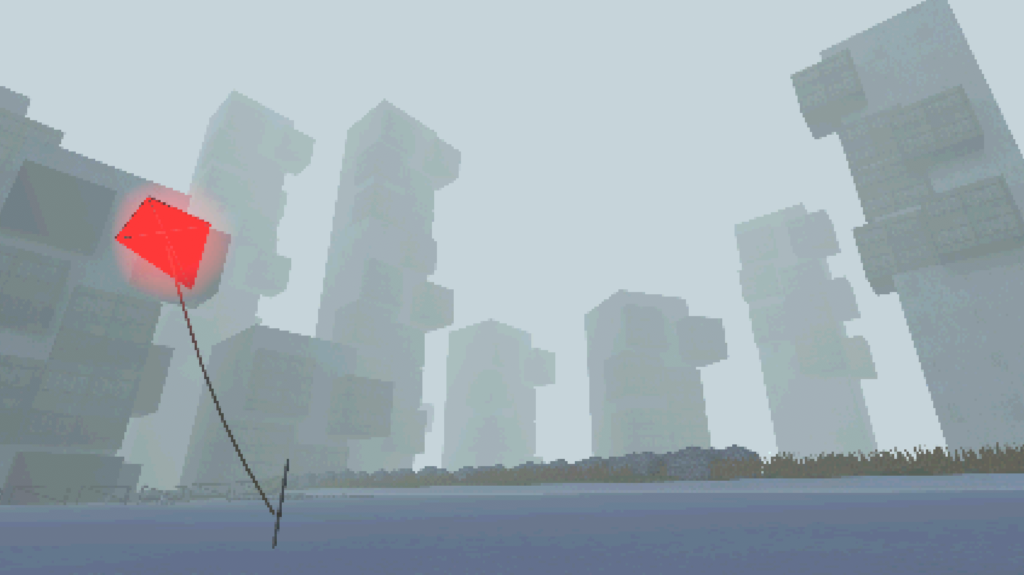
For developer Digital Tchotchkes (aka Logan), the people in games have always been the reward. “The original Fallout games instilled in me a love of talking heads. The way characters moved and looked was so weirdly unique and memorable that just interacting with them was the reward,” Logan said.
An ethos that would carry over from adolescent days of exploring the wasteland, and eventually serving as the foundation for Logan’s own uniquely bizarre, though nonetheless compelling, game, Go Fly A Kite.
However, for all that Go Fly A Kite achieves, succinctly describing the game is another matter.
“If someone is down with indie games, I’ll describe it as a short little narrative thing. And if they aren’t, I stare at my shoes, say it’s kinda like Myst, but it has no puzzles, and then stare at my shoes until the conversation changes to something else,” Logan told me with a slight chuckle.
We eventually settled on calling Go Fly A Kite an adventure game. So, to further illustrate the game’s complexity, I’ll offer my own summation of this seminal bite-sized masterpiece.
Go Fly A Kite is a dark adventure satire that follows an average Joe navigating a terminal diagnosis in the week leading up to the end of the world. What ensues is a jaunt through a brutalist, surreal world occupied by a rogue’s gallery of claymation weirdos, each of whom grapples with their own absurd mortality in the face of annihilation.
From a surface-level examination, Go Fly A Kite resembles the lovechild of PSX-era graphics and malformed claymation, whose creative inspiration could only have originated from the bottom of a bong. However, it’s Logan’s seminal blending of dark humor, heartfelt introspection, and claymation that gives the game its melancholic multitudes, making it more than just something to gawk at.
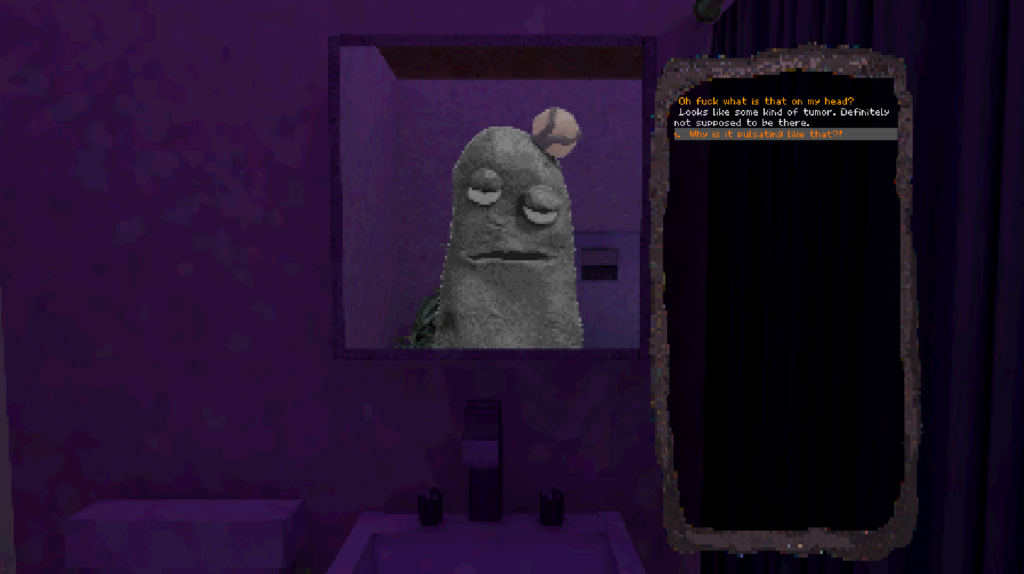
Emotionally moving multitudes that originated from a parasite of all things.
“The writing for Go Fly A Kite happened in 2019, when I had a stomach parasite, which made me go a bit crazy and develop a panic disorder. I was constantly experiencing panic and anxiety, and was freaking out thinking that everything was going to kill me,” he said.
And then the COVID-19 pandemic happened.
“All of a sudden, there was this collective isolating experience we were all sharing that made what I was struggling to communicate to others a bit more understandable.”
Logan further expanded on his relationship with games and art, saying, “The beauty of art is, maybe someone doesn’t know how to express something in words, but through this thing, like games, someone will be like ‘ah, I know that this person gets what I’m experiencing,’ which can make the world feel like a lot less of a lonely place.”
Given the game’s origin, you couldn’t be blamed for assuming Go Fly A Kite was yet another dour pandemic allegory. Yet in practice, it’s an incredibly funny and entertaining experience despite its parasitic/pandemic origins.
From the outset, Logan’s knack for personable and humorous writing, influenced by a lifetime of internet culture and forums, is apparent. The game’s protagonist scrolls through forums rife with apocalyptic conspiracy theory posts and users sharing their plans for the end of the world.
Trolls descend on one poster, claiming that their shitty posts are responsible for the apocalypse. Another relishes their plans to match money shots with the universe imploding. The spectrum of being chronically online has been summarized in a few seconds.
The use of language is integral to establishing the game’s tone. An indication of a creative drawing from what they know, to grapple with the inherent challenge of designing an entire world from scratch.
Despite taking a gaming hiatus in college, Logan’s pursuit of other artistic endeavors in the interim, such as music, would prove a monumental revelation in his journey toward releasing his first game.
“When I hear music that comes from a scrappy, smaller band, it makes me say, ‘wow, I can hit that sound’, versus listening to a band that has a whole orchestra, which makes me say, ‘well, that’s cool, but I don’t have that, so that isn’t something I can ever do,’” he said.
In the face of what seems insurmountable to most, Logan drew inspiration from games that made fantasy seem like an attainable reality.
A post-college return to games occurred at a fortuitous time in indie gaming’s history, as Logan discovered games such as Thirty Flights of Loving and other small, in-stature games on sites like itch.io that reinforced the power of indie game developers’ individuality. “You could see how it [indie games] was made by one person. Whereas, despite the impact a game like Spyro had on me growing up, that was clearly made by, like, 100 people. I can’t do that,” he said.
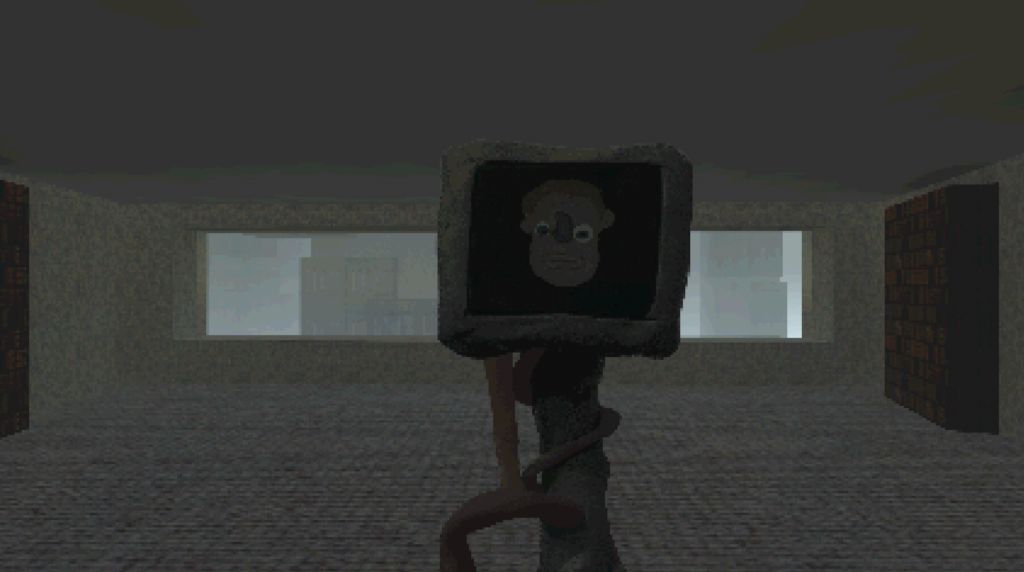
Herein lies the impetus for Go Fly A Kite’s most unique visual aspect: 2D claymation characters in a 3D world. A lifelong admiration for claymation and the works of stop-motion god Phil Tippett served not only as inspiration but also as the basis for Logan to bring his daydreams to life.
“I was in an art supply store, and saw clay on the shelf, and I was instantly reminded of the characters from Fallout,” he said. Logan described the intuitive problem-solving involved in molding his game’s characters and finding their form as, as he puts it, “playful to his lizard brain.”
While an arduous process, morphing clay into creatives was a creatively liberating one, as Logan described turning several mistakes into “happy accidents,” as he put it.
“If I made a mistake, the character looks like that forever, and there’s no going back, he said. While Go Fly A Kite is not overtly a horror game, its apocalyptic eeriness stems from the contrast between the imperfections of its clay denizens and the lo-fi, pixelated world they inhabit.
Imperfections that ultimately facilitate the bold confidence with which Go Fly A Kite presents its otherworldly, while nevertheless unforgettable, microcosm of doom to players.